Standing out online in the competitive outdoor industry is crucial to attracting adventure enthusiasts and outdoor gear shoppers. Pay-Per-Click (PPC) advertising offers a powerful way to drive targeted traffic and boost sales.
This guide walks you through the essentials of managing PPC campaigns tailored to the outdoor industry, from choosing the right keywords to optimizing performance and maximizing ROI. Whether you sell hiking gear, promote guided tours, or offer outdoor apparel, this how-to guide will help you build and maintain effective PPC campaigns.
What is PPC Advertising for the Outdoor Industry?
PPC advertising for the outdoor industry is a digital marketing strategy. Companies pay a fee each time their ad is clicked, driving targeted traffic to their website or landing pages. This advertising model allows outdoor brands—such as those selling camping gear, outdoor apparel, or adventure services—to reach particular audiences searching for products or experiences. Using platforms like Google Ads or social media channels, outdoor companies can showcase their offerings to users based on keywords, location, or demographics. PPC is particularly effective in the outdoor industry because it can target seasonal trends, adventure enthusiasts, and niche interests, ensuring ads are seen by those most likely to convert into customers.
A Guide to PPC Advertising for the Outdoor Industry: 5 Insider Tips
Whether you’re just starting or have been trying to fine-tune your PPC strategy for a while now, here are 5 tips to boost your campaign’s performance:
1. Target effective keywords for the outdoor industry.
The first step to successful PPC campaigns is identifying relevant ad keywords. When searching for a product or service, users use specific keywords to help them find it online. Start your PPC campaign with thorough keyword research, focusing primarily on long-tail keywords. If you have an outdoor company selling in stores or offering services in a specific region or multiple locations, make these keywords geo-specific for better targeting.
Long-Tail Keywords: Long-tail keywords consist of three or more words and are more specific than head search terms. Long-tail phrases are often more effective in PPC campaigns, increasing qualified traffic ready to move through the sales funnel. Since they’re so precise, they typically face less competition and have a lower cost per click. It helps to include a specific product, service, or location in your keyword to engage with online users searching for outdoor companies. For instance, if you’re selling outdoor gear such as sleeping bags, hiking backpacks, and trekking poles in Northern Washington, an excellent long-tail keyword to target could be “outdoor equipment Seattle” or “outdoor shop Seattle.”
Once you’ve selected your keywords, it’s time to enter the bidding system. Other businesses will compete for the same search terms, so you’ll have to bid for your placement. Determine your maximum bid for ad spend, which is the amount you’re willing to pay every time someone clicks on your advertisement. You can change this maximum bid amount anytime. After you’ve decided on a maximum bid, your quality score and bid will determine your ad’s placement in the search results. Your quality score is determined by your site’s reliability, authority, and quality to online users. Google and other search engines determine this score based on click-through rates, former campaigns, and other performance metrics.
2. Craft engaging ad copy.
After you’ve decided where and when your advertisements will appear, it’s time to start writing stellar ad copy. In this section, we’ll focus primarily on Google Ads for the outdoor industry, detailing how to craft targeted messages that resonate with adventure-seekers and nature enthusiasts and drive them to take action. However, these tips for writing engaging ad copy can translate to various platforms where you’re running PPC campaigns.
To properly understand how to write ad copy that converts, it’s essential to know the anatomy of a Google ad:
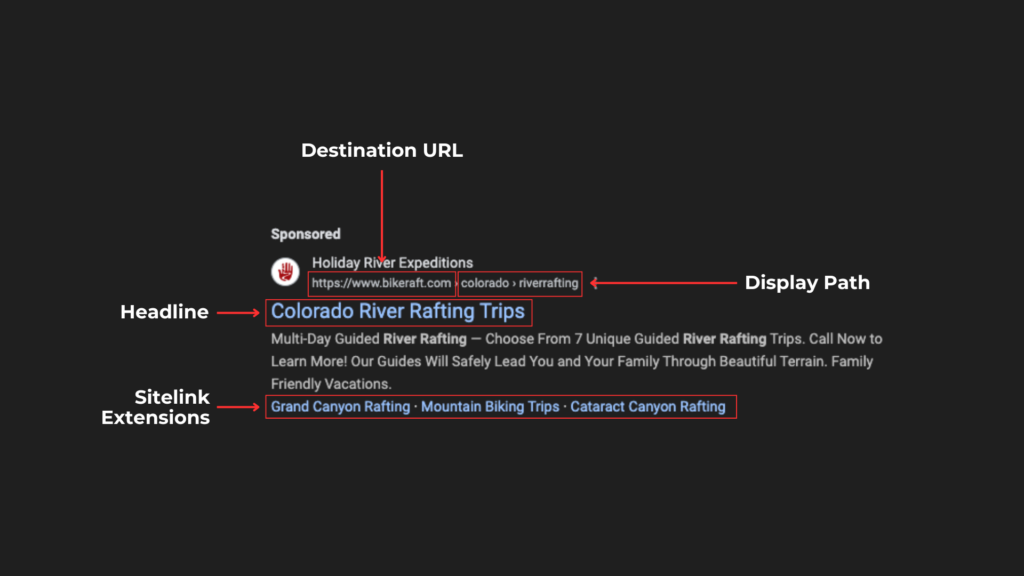
URL: The “destination URL” is where online users will be directed when they click on your ad.
Pro Tip: Ensure this link sends people where you want them to go. For instance, if a user searches “women’s hiking shoes,” direct them to the page that features women’s hiking shoes rather than the homepage, where they’d have to take additional steps to locate what they’re looking for. We’ll dive deeper into landing pages later.
Display Path: This section appears after the URL and is called a “display” since it doesn’t have to be the page’s actual URL. This section of a Google ad clarifies where the link leads online users.
Pro Tip: Use Display Paths to inform users (and potential customers) what they will get when they click on your ad. The more specific your Display Path, the better your ad will perform.
Headlines: Headlines are perhaps the most critical part of your advertisement. Google allows space for three headlines, but due to ad relevance and ranking position, only the first two often appear. These are the first things online users see when viewing your ad, so it’s important to structure these appropriately for maximum conversions. If your headlines aren’t solid and built for conversions, online users most likely won’t read your ads’ descriptions, so take your time crafting these titles.
Pro Tip: Headline 1 should include the keyword you’re targeting (e.g., “climbing gear grand rapids”), with the other headlines highlighting key features or the location of your outdoor brand. Occupy as much space as possible (Google has a limit of 30 characters) with relevant ad copy. Additionally, use title case (the first letter of each word is capitalized) since research shows that these headlines perform better for click-through rates.
Description: Google has a 90-character limit for ads, making these sections short and sweet, which is what online users want. People often skim ad descriptions to get more information about your product or service, and they’re not usually looking for a lengthy paragraph—they want you to get to the point.
Pro Tip: Structure ad descriptions similar to bullet points in sentences, highlighting the features of your product or services and always ending with a solid call to action (CTA), whether calling your business or going to a landing page. Naturally, include your targeted keywords throughout the description.
Assets (formerly known as extensions): Including assets is an often overlooked aspect of Google ads for the outdoor industry. Google favors campaigns that include assets, improving quality scores and ads’ ranking positions on SERPs. Assets include site links, click-to-call buttons, product highlights, and contact details.
Pro Tip: The types of assets you add to your campaign will depend on your conversion goals, but we recommend adding as many as possible. Relevant assets enhance your ad in Google’s eyes. They can seamlessly lead online users through the sales funnel—link to specific landing pages or a call button to turn potential customers into paying clients.
3. Optimize landing pages
Setting up an effective landing page is just as crucial as adequately structuring your outdoor company’s PPC advertising campaign. Here are a few insider tips to optimize your landing page for search engines and online users alike:
- Match the content with the ad copy. After writing your PPC ad, ensure the landing page’s headlines, content, forms, and calls to action (CTAs) match the advertisement’s messaging. This will not only prevent user confusion but also improve your ad quality score.
- Deploy a solid call to action. When users click on your PPC ads, make it easy for them to engage with your company. Don’t make them scroll to the bottom of the landing page to take action. Instead, highlight your CTA prominently throughout the page. CTAs for the outdoor industry should be direct and to the point, such as “Call Now!” or “Order Today!” Placing a strong CTA throughout your landing page increases conversions and engagement.
- Ensure fast page loading speed. 82% of consumers note that slow page speeds impact their purchasing decisions—don’t risk losing a customer due to a sluggish landing page. Fast page speed requires a few basic SEO practices: compress images, minimize scripts, and optimize performance to keep the load time under 3 seconds.
- Keep forms short and to the point. Collect information on potential customers on your form without neglecting its user-friendliness. Keep the form short and only ask for essential information from your user. The length of your form can significantly impact conversion rates, so ensure it’s quick and easy to fill out. Consistently optimize and test your form to ensure users have a positive experience.
- Make the page readable for users. Use headings, subheadings, and whitespace effectively to guide the viewer’s eye. This boosts engagement and conversion rates, leading to higher-quality leads and a more substantial return on investment for your PPC campaigns.
Crafting high-converting landing pages for the outdoor industry requires consistent monitoring, testing, and re-optimizing the page. While it can be a time-consuming process, it pays off in conversions and engaged online users, which is invaluable for your business.
4. Define your conversions properly & set up tracking.
A common mistake outdoor industry companies make in their PPC campaigns is constantly monitoring metrics such as page views or clicks, which are easier to track but don’t lead to conversions like purchases or bookings. While actions like page views or clicks can boost your campaign’s performance on paper, they don’t always guarantee revenue. The best way to succeed in PPC advertising is to define the primary conversions or actions that directly contribute to your company’s goals.
What does a conversion mean for your outdoor business? For those in the outdoor industry, here are a few examples of primary conversions:
- Purchases: When a user purchases outdoor equipment or gear.
- Lead Submissions: When a potential customer fills out a form to learn more about your services or activities offered.
- Bookings: When an online user completes a booking for a tour or adventure.
Once you’ve defined your conversions, setting up your PPC campaigns to focus on driving those actions rather than low-converting metrics like clicks or page views becomes easier. Tracking these conversions is essential to measuring your campaigns’ effectiveness.
Track PPC ad campaigns using tools like Google Ads and Bing Ads dashboards to monitor clicks, impressions, CTR, and conversions. Set up Google Analytics with UTM parameters to analyze user behavior and track ROI. Regularly review performance reports to optimize targeting, keywords, and budget.
5. Continuously monitor and optimize your results.
Monitoring your campaign performances allows you to discover trends and areas of underperformance, helping you adjust your strategies accordingly. Whether you need to refine keyword targeting or adjust your bidding strategies, consistent analysis and optimization ensure your campaign performs to the highest possible potential, producing results that meet your company’s goals.
Here are a few elements of monitoring for outdoor industry companies that ensure the long-term success of their PPC campaigns:
A/B Testing: Experiment with different ad headlines, descriptions, images, and CTAs to determine what resonates best with your audience. Regular testing allows you to refine your approach and maximize click-through and conversion rates.
Bid Adjustments: Analyze performance data to adjust bids based on device type, location, time of day, or audience segments. This ensures you allocate your budget to high-performing areas for better ROI.
Performance Review: Regularly review critical metrics such as click-through rates, conversion rates, and cost per conversion. This helps you identify trends, address underperforming ads, and optimize your campaigns for long-term success.
Budget Management: Monitor your budget to avoid overspending while ensuring sufficient funds are allocated to high-performing campaigns. Adjust allocations based on seasonal trends or product-specific demands in the outdoor industry.
We Offer PPC Expertise for Companies in the Outdoor Industry
Do you want to climb the ranks online by leveraging PPC campaigns? Rock Salt Marketing can help you do that. With our expertise and years of experience, we create and manage targeted PPC campaigns for small and multi-location companies designed to drive traffic, increase conversions, and deliver measurable results for your outdoor brand. Let us help you scale your business and reach new heights online. Contact Rock Salt’s PPC professionals to boost your online presence.